August 4, 2020
The politics of political maps in South Asia
By Abdus Sattar Ghazali
Pakistan Prime Minister Imran Khan on Tuesday unveiled a new “political map of Pakistan” that showed Jammu and Kashmir as well as Junagadh as the territories of Pakistan. 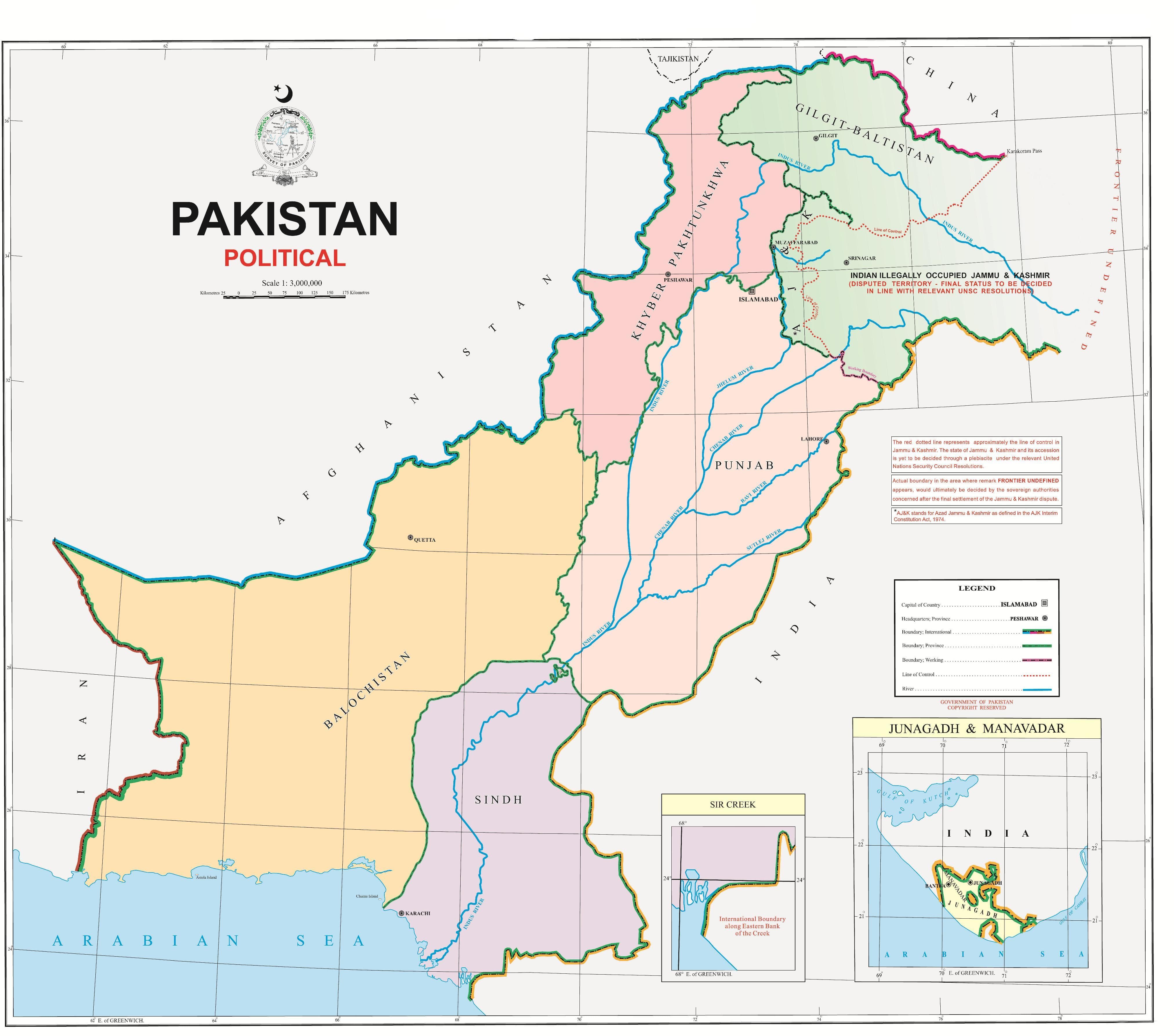
The map was released a day before the annexation of the disputed territory of Jammu and Kashmir .
Unveiling the new map on Tuesday, Pakistani Prime Minister Imran Khan said that it "represents the ambition of the people of Pakistan."
“Today, we are introducing the new map of Pakistan before the world. This new map has been endorsed by Pakistan's cabinet, opposition and the Kashmiri leadership. This map is as per the aspirations of the entire nation as well as the people of Kashmir," Imran Khan said in a press conference in Islamabad.
“This map also opposes the Indian government’s illegal act of August 5 last year,” Imran Khan stressed.
India called the new map as a political absurdity.
“We have seen a so-called "political map" of Pakistan that has been released by Prime Minister Imran Khan. This is an exercise in political absurdity, laying untenable claims to territories in the Indian State of Gujarat and our Union Territories of Jammu and Kashmir, and of Ladakh. These ridiculous assertions have neither legal validity nor international credibility,” external affairs ministry spokesperson Anurag Srivastava said in a brief statement.
“In fact, this new effort only confirms reality of Pakistan’s obsession with territorial aggrandisement supported by cross-border terrorism,” Srivastava said, referring to the ‘so-called political map’ released by Imran Khan.
Retired Indian Brigadier Nalin Bhatia, told Financial Express that the latest move by Pakistan is bound to exacerbate tensions not only along LOC but entire Indo Pak border. “Printing of new maps by that country adds a new dimension to the worsening relations between India and Pakistan. Pakistan’s act is not symbolic but taken with a devious mindset to escalate tensions,” said the army veteran.
Shishir Gupta of Hindustan Times wrote: The so-called new political map released by PMImran Khanᅠsounds a death knell to the self-determination movement among separatists in Kashmir Valley as Islamabad has now co-opted Jammu and Kashmir, leaving no space for either plebiscite or independent Kashmir. This does not come as a surprise to Kashmir watchers in New Delhi as both self-determination and so-called freedom struggle was aᅠruse for cross border terror activities.
Till now, Pakistan has resisted calling the all areas of Pakistan administered Kashmir as a part of its territory officially. While it treats Gilgil-Baltistan as its territory, it calls the rest 'Azad Kashmir'.
The new map showed Pakistan frontier clearly marked with India with the entire Kashmir as its territory. However, the part of Kashmir and Ladakh border with China was not marked and described as “Frontier Undecided”.
Similarly, the Line of Control (between Pakistan and Kashmir) had been extended to the Karakoram Pass, clearing showing Siachen glacier as part of Pakistan.
The Jammu & Kashmir had been described as “Disputed Territory Final status to be decided in line with relevant United Nations Security Council resolutions”.
India and Pakistan have fought two of their three wars over Kashmir, and the Himalayan region has remained the focus of a flare-up between the two nuclear powers over the years.
The map also shows Siachen glacier as a part of Pakistan. "[Through the map] we are challenging their illegal occupation and claiming our right to the area," Pakistan foreign minister Shah Mehmood Qureshi said.
In 1984, India seized the glacier from Pakistan. In his memoirs, former Pakistani president, General Pervez Musharraf states that Pakistan lost 985.71 sq mi of territory. Time magazine also states that the Indian advance captured 985.71 sq mi of territory claimed by Pakistan. Camps were soon converted to permanent posts by both countries. [Wikipedia]
Why Junagarh included in the map? Jammu & Kashmir is a disputed territory part of it administered by Pakistan and part by India. The Nawab of Junagadh, Muhammad Mahabat Khanji III, acceded to Pakistan on September 15, 1947. However, Indian Interior Minister Vallabhbhai Patel forcibly annexed Junagadh.
Nepal issues a new political map
Pakistan's move comes after another of India's neighbor Nepal completed the process of redrawing the country's political map through a Constitutional amendment, incorporating strategically important Lipulekh, Kalapani and Limpiyadhura areas which India claims belong to it.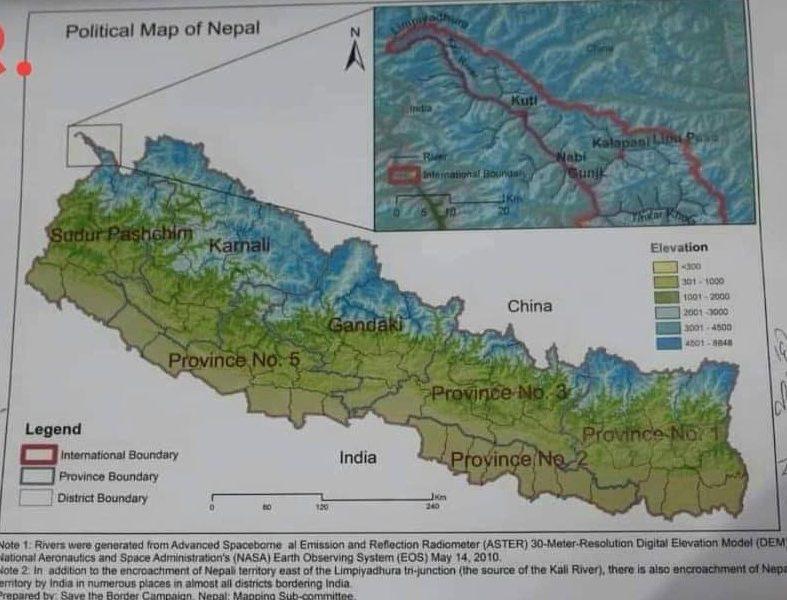
In May last, Minister of Land Management Padma Kumari Aryal issued Nepal’s new political and administrative map depicting Limpiyadhura, Lipulekh and Kalapani areas as Nepal’s territory.
After issuing the map Aryal said “the occasion marked a milestone in the glorious history of the country. “
“Today is the happiest day for this generation of Nepalis,” she said, adding that the issuance of the new political and administrative map would boost the morale of all Nepalis.
The Minister issued the map a day after Nepal’s Prime Minister KP Sharma Oli told the House of Representatives that the government would reclaim Limpiyadhura, Lipulekh and Kalapani.
Stating that the three areas that lay east of the Kali (Mahakali) River were Nepali territory as per the 1816 Sugauli Treaty, the minister said the government was glad that the border issue had united the entire country.
Nepal issued the political map one week after India had inaugurated a link road from Pithoragarh in Uttarakhand to Kailash Mansarovar in Tibet Autonomous Region of China via Lipulekh. Nepal’s Ministry of Foreign Affairs issued a press statement objecting to the inauguration of the link road and also handed over a diplomatic note to India’s Ambassador to Nepal Vinay Mohan Kwatra to protest the inauguration of the link road.
Indian Ministry of External Affairs said: “The Government of Nepal has released a revised official map of Nepal today that includes parts of Indian territory. This unilateral act is not based on historical facts and evidence. It is contrary to the bilateral understanding to resolve the outstanding boundary issues through diplomatic dialogue. Such artificial enlargement of territorial claims will not be accepted by India.”
Chinese connection
New Delhi sees increased Chinese role in Nepal as a reason for current comments by Kathmandu. Indian Army Chief General Manoj Mukund Naravane has hinted at foreign involvement with Nepal raking the Lipulekh issue.
Army Chief speaking at a think tank IDSA's online meet said, "I do not know exactly what they are exactly agitating about. Never been a problem in the past, reasons to believe they might have raised these problems, issues at the behest of someone else and there is very much a possibility." The Indian Army Chief did not name China, but he hinted that Beijing was the only interested party to it.
Interestingly, China has said that the issue is between Nepal and India. "The issue of Kalapani is between Nepal and India. We hope the two countries will resolve their differences properly through friendly consultations, said Zhao Lijian, spokesperson for the Chinese Foreign Ministry.
Abdus SattarGhazali is the Chief Editor of the Journal of America (www.journalofamerica.net) email: asghazali2011 (@) gmail.com







The Journal of America Team:
Editor in chief:
Abdus Sattar Ghazali
Senior Editor:
Prof. Arthur Scott
Special Correspondent
Maryam Turab

Your donation
is tax deductable.